01 · The Problem
Two years ago we launched an AI assistant on X5’s B2B supplier portal. At first, almost nobody used it.
The reason wasn’t technical — it was behavioral. Our partners had already dealt with a legacy rule-based bot that trapped them in loops and never solved real issues. Sitting quietly behind a generic chat icon, the new AI assistant looked like the same dead end.
02 · Design Strategy — Proactive, with a Way Out
In a regulated B2B portal where suppliers handle contracts, payments, and compliance documents, “the model decided so” is never an acceptable answer. People only trust AI when they remain in control.
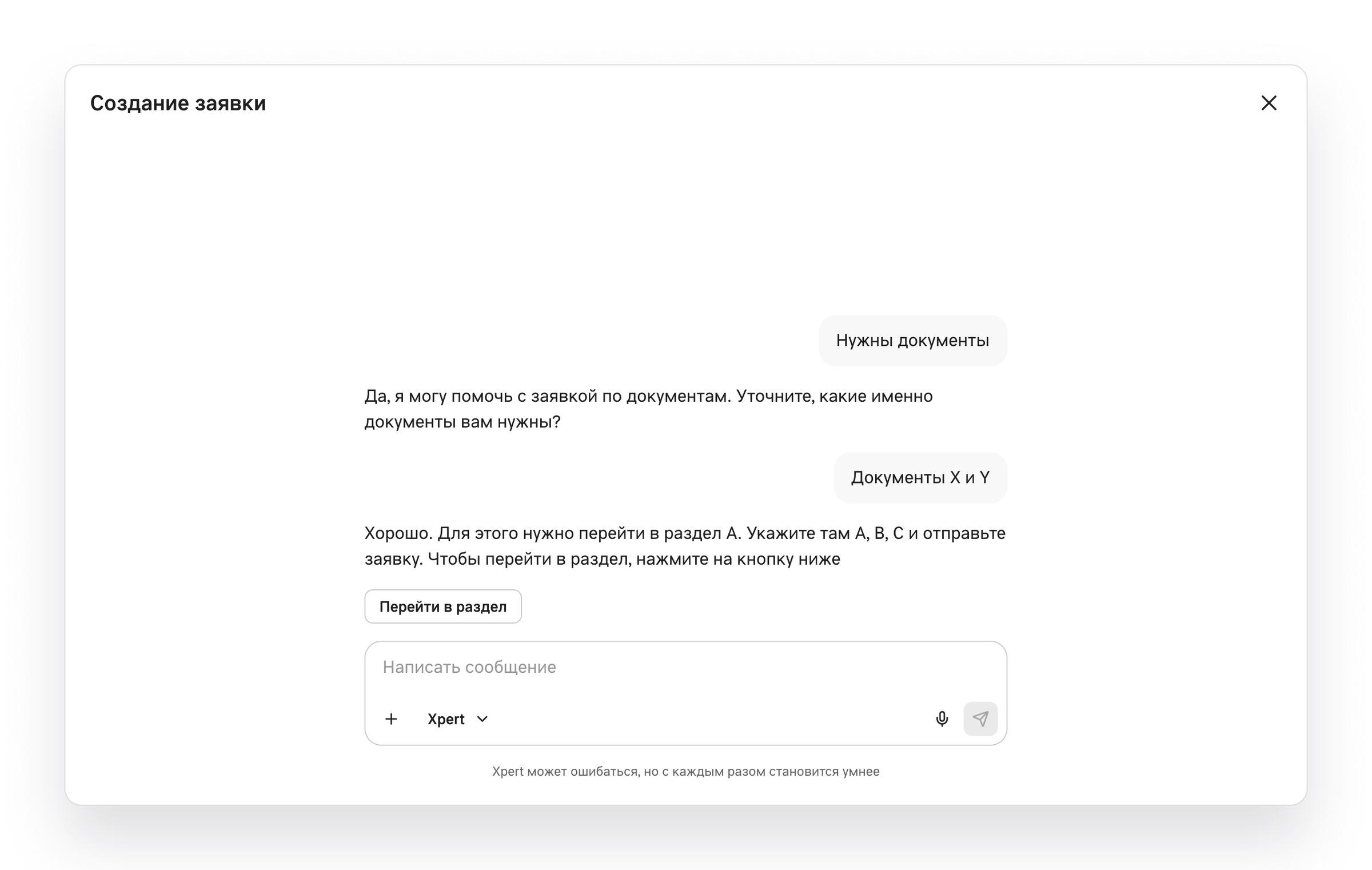
- Proactive context: Open the assistant automatically when a partner starts creating a support ticket — right when they actually need help, guiding them directly to the right section.
- Unmistakable escape hatch: A clear close button (
×) in the top-right header andEscapeshortcut so users can dismiss the assistant in one click and proceed manually.
 Designed state: proactive Xpert AI assistant with a clear close button (×) and direct section CTA
03 · The Plot Twist — 31 Days Without an Exit
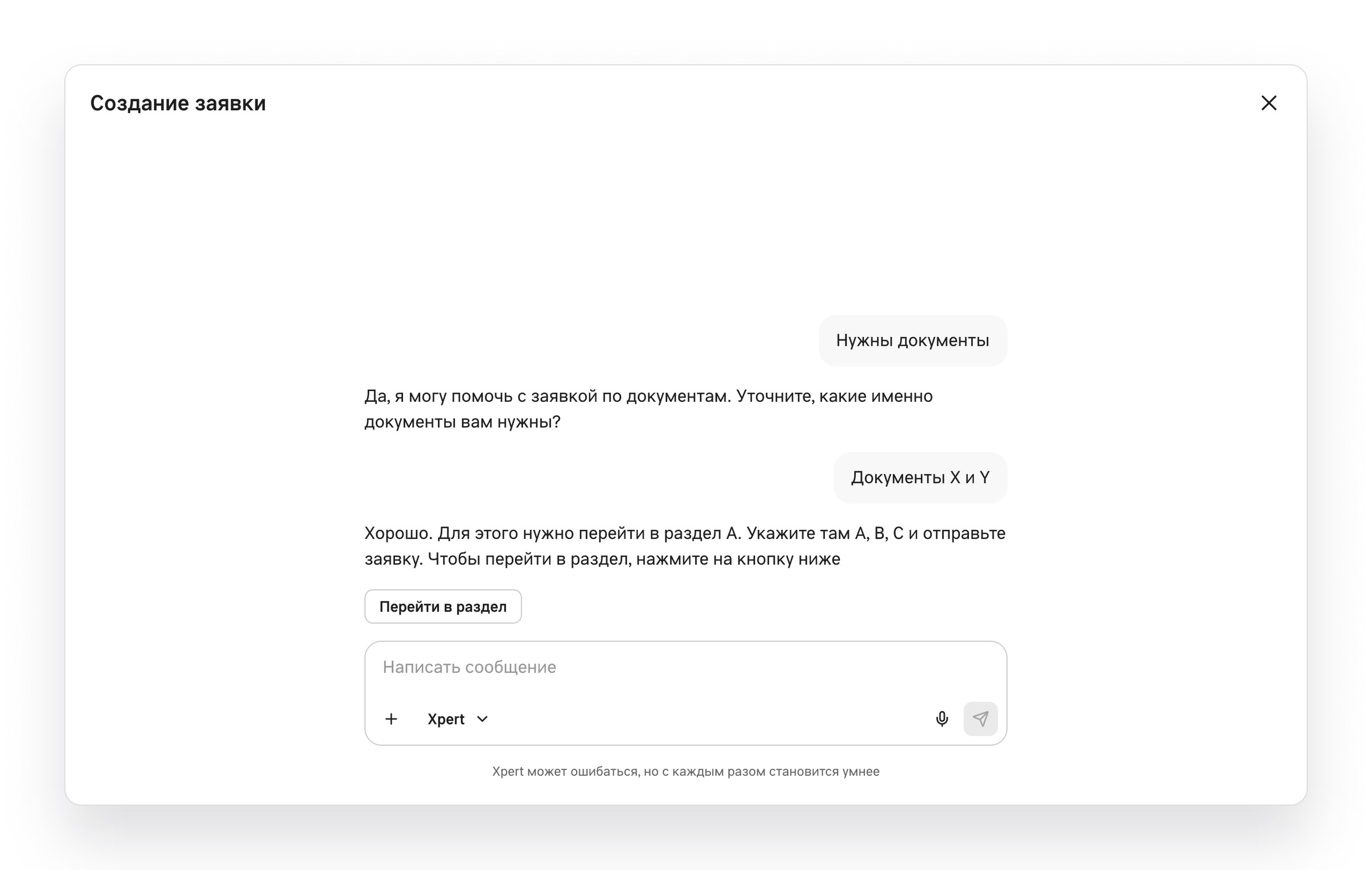
In June, the close button was quietly removed in production without design sign-off to “increase bot engagement.”
A month later, during live user research, I watched suppliers repeatedly hammering the Escape key trying to get out of the assistant. Without an exit, the bot stopped feeling helpful and started feeling like a trap — damaging trust not just in the AI, but in the entire portal.
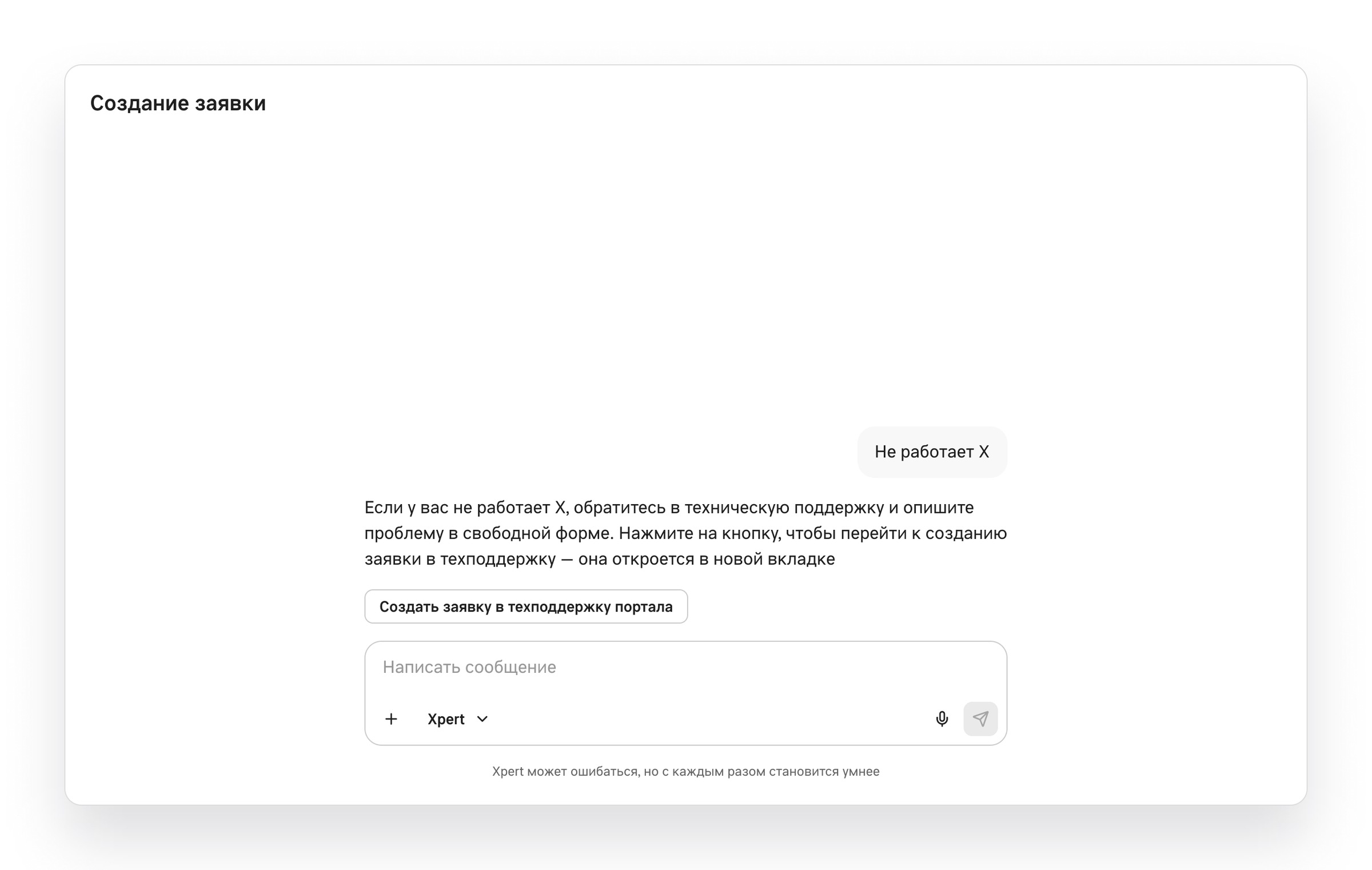 Shipped regression: the exact same modal pushed to production without the close button
I brought the research recordings to the team, restored the close button the very next day, and established a new team rule: no UX-facing removals ship without design sign-off.
04 · Impact
- Grew adoption from near-zero to 400+ real supplier sessions per month
- Protected supplier trust in a high-stakes regulated B2B environment
- Established clear UX design governance between product and engineering